The short answer
Preserve a putter’s alignment references, face treatment and playing specifications before changing its finish, grip or shaft. Small cosmetic changes can matter at address.
Putter refurbishment deserves a putter-specific plan. The face, sight lines, neck, shaft and grip all contribute to how the club sits and looks at address, even when the requested change seems cosmetic.
Document the address view
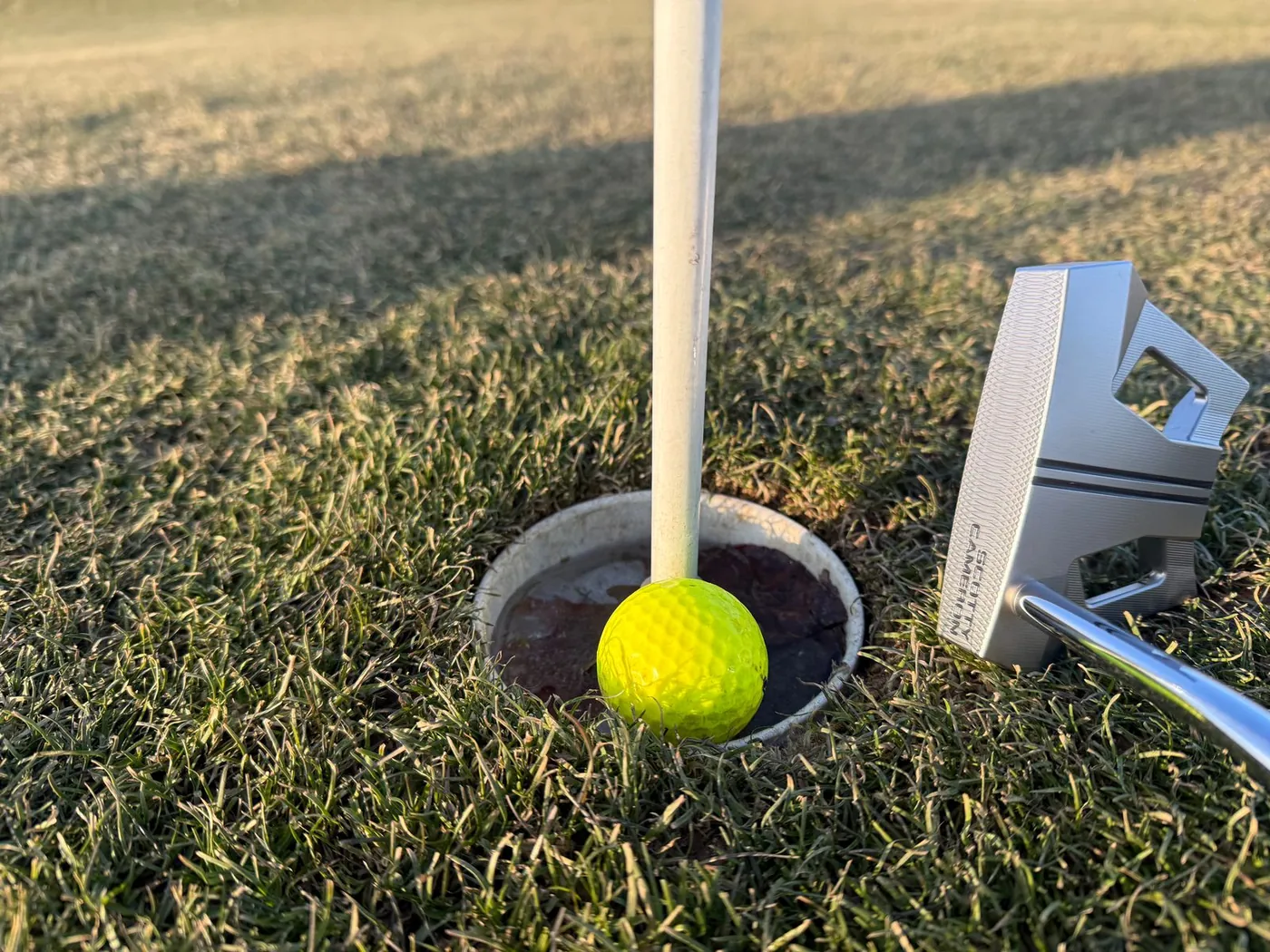
Photograph the topline, flange, sight line and face square-on. Record playing length and, if known, loft, lie and head weight. This creates a reference before paint fill, shaft or grip work changes the appearance or balance.
Protect the face
Identify whether the face is milled metal, plated, grooved or fitted with an insert. Polishing across milling can erase texture; chemicals or abrasion can damage inserts and surrounding bonds. A loose or damaged insert needs assessment as a component problem.
Grip and shaft choices have consequences
A fresh grip can solve worn or slick contact without refinishing the head. Changing grip model or shaft can alter total weight and balance, so decide whether preservation or deliberate change is the goal. Bent shafts and loose heads require functional repair before cosmetics.
Alignment marks need an agreed finish
Fresh paint fill can make sight lines clearer, while removing original marks may make the putter unfamiliar. Specify which stamps and lines stay, which colour is wanted and whether small dents or patina should remain.
The R&A Equipment Rules include requirements for putter faces and club construction. For regripping, reshafting or assessment at Fix It Golf, visit repairs or email hello@fixit-golf.com; ask separately whether cosmetic work can be arranged.
Back to the journal