The short answer
Treat a mixed set club by club. Clean first, repair functional faults second, and commission refinishing only for heads whose construction and desired finish are understood.
A whole-bag refinishing project is rarely one process. Irons, wedges, woods and a putter may use unrelated materials and finishes, so the practical unit of planning is each club or matching set.
Create a condition inventory
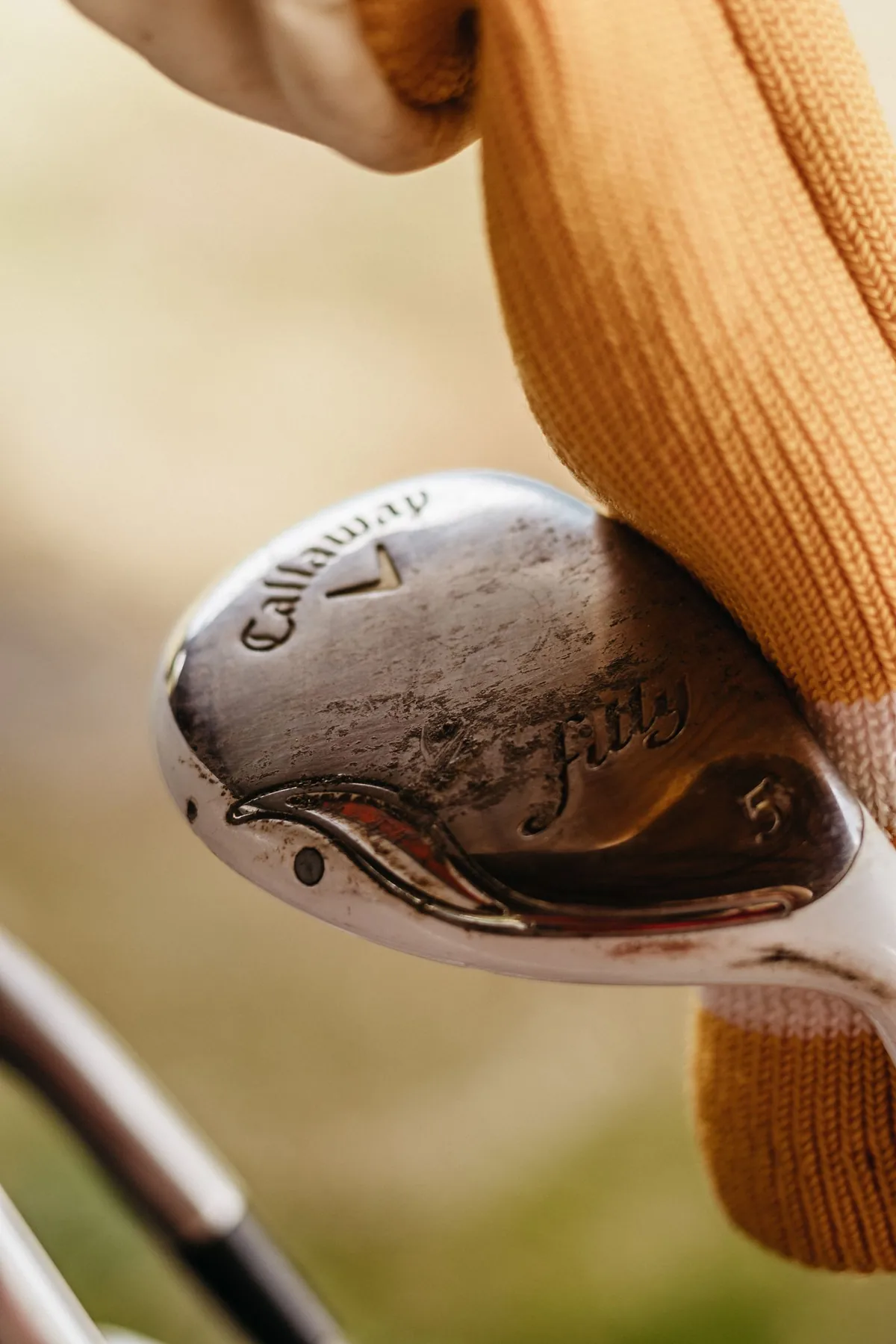
Photograph each head after ordinary cleaning and note finish wear, rust, dents, chips and damaged paint fill. Separately record worn grips, loose ferrules and shaft damage. This prevents cosmetic work from obscuring a functional repair.
Group matching constructions
A matching iron set can usually be assessed together, while a raw wedge, painted hybrid and insert putter need separate decisions. Confirm the precise model and original finish. A finish seen on another club is not evidence that the same treatment suits yours.
Set priorities for sentimental clubs
For an inherited or collectable club, preserving stamps, patina and original proportions may matter more than producing a bright surface. Ask which marks will remain and whether originality will be lost. Photograph all markings before work.
Keep functional work measurable
If grips, shafts, length, loft or lie are changing, document the intended finished specifications. Face or groove modification can raise conformance issues under the R&A Equipment Rules.
See Fix It Golf’s repair services for functional work. Cosmetic options depend on the model; email hello@fixit-golf.com with an inventory and photos to ask what may be arranged.
Back to the journal