The short answer
Identify the head’s substrate, finish and attached components before refinishing. The safest process and achievable result differ sharply between plated iron, raw wedge, painted wood and insert putter.
Clubhead refinishing is governed by materials. The process suitable for a solid stainless putter may be wrong for a plated iron or a driver with a carbon crown, even when the surface wear looks similar.
Build a material map
Identify the base metal, any plating or paint, and every insert, badge, bonded panel and removable weight. Manufacturer model information can help, but an older or modified club may still need physical inspection. Treat an unknown head as unknown rather than guessing from colour.
Plated, raw and painted heads
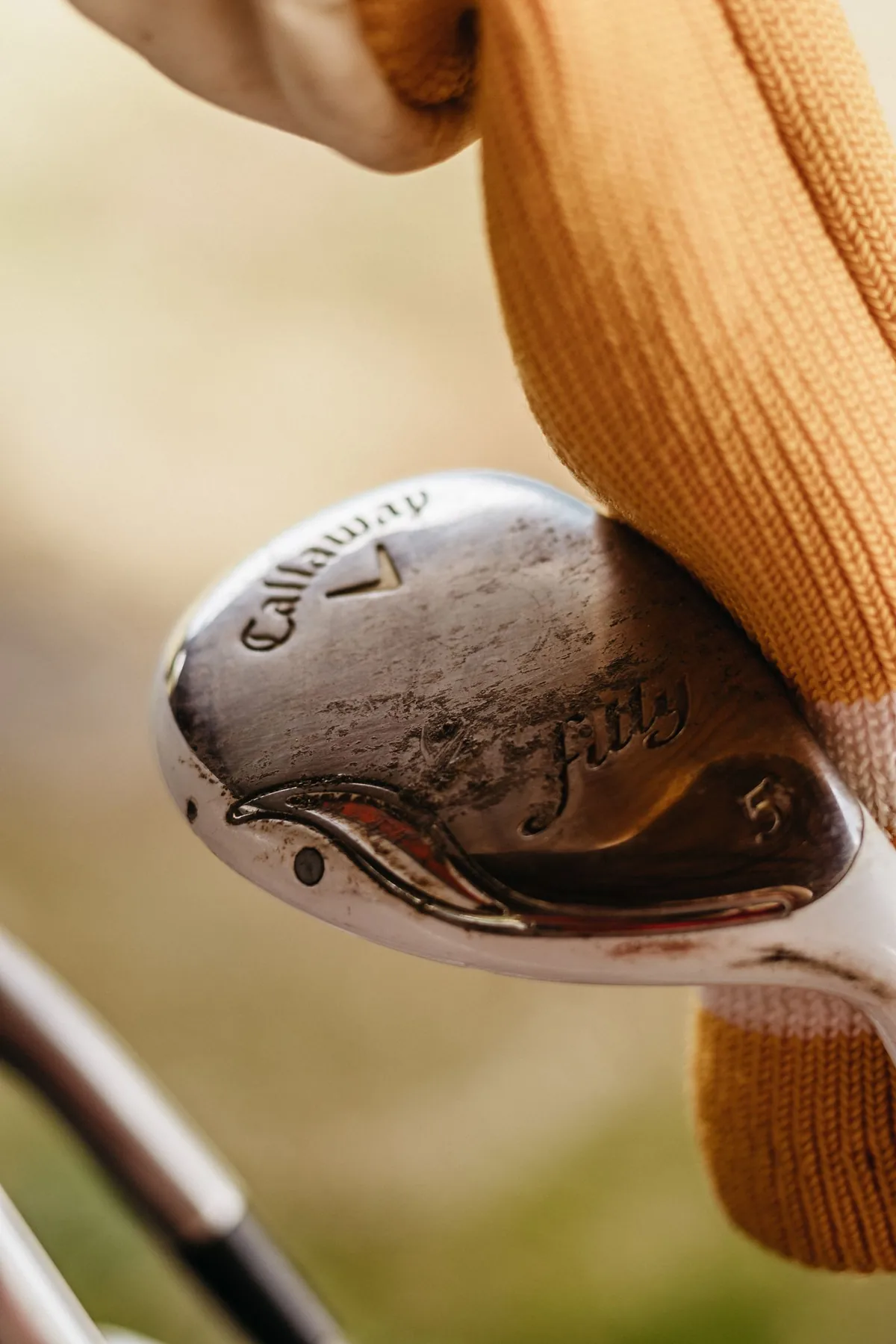
A plated head has layers over its base metal; wear through a layer cannot be fixed by simple polishing. Some raw finishes are expected to rust: Vokey notes this for its raw wedges. Surface rust alone therefore does not establish a structural fault, though deeper corrosion still needs assessment. Painted woods require special caution around thin walls, face edges and bonded materials.
Putters and multi-part constructions
Face inserts, elastomers, cavity badges and sight lines can be damaged or altered by a process aimed at the surrounding metal. Record head weight and preserve stamps and alignment features before approving work. Exact restoration of an old colour or texture may be unrealistic.
The face is not merely cosmetic
Grinding, re-cutting grooves or changing impact-area markings can affect conformance under the R&A Equipment Rules. Keep face work outside a cosmetic brief unless its implications are understood.
For functional issues, visit Fix It Golf repairs. Cosmetic restoration depends on model and condition; email hello@fixit-golf.com to ask whether work can be arranged.
Back to the journal